
Are you considering teaching ukulele in your elementary music class? This post is your go to resources for all things ukulele in the classroom. I will share how I teach ukulele at my school, what ukulele songs and chords I use, and how to keep it fun and oragnized.
Ukuleles are a great way to teach students both melodic and harmonic concepts and build independent musicianship.
Buying Ukuleles
Before you can start a teaching ukulele, you have to have some ukuleles. There are many, MANY options. So let’s talk through some of it.
Ukulele Price
As with any instrument, the cost of a ukulele can vary depending on quality and type. For your classroom, I recommend a soprano ukulele. They are smaller and easily fit into students’ hands. And they are cheaper. As of the time of this post’s creation, a soprano ukulele will probably run you about $30-$70.
You may be able to get a discount for buying a classroom set. Check out sites like West Music to see the deals they have available.
As for me? When I started at my current school, they already had a classroom set of ukuleles. Surprisingly, they were a brand sold on Amazon and as of yet (5 years in), they still hold their tuning pretty good (not perfect but doable).
Ukulele Tuning
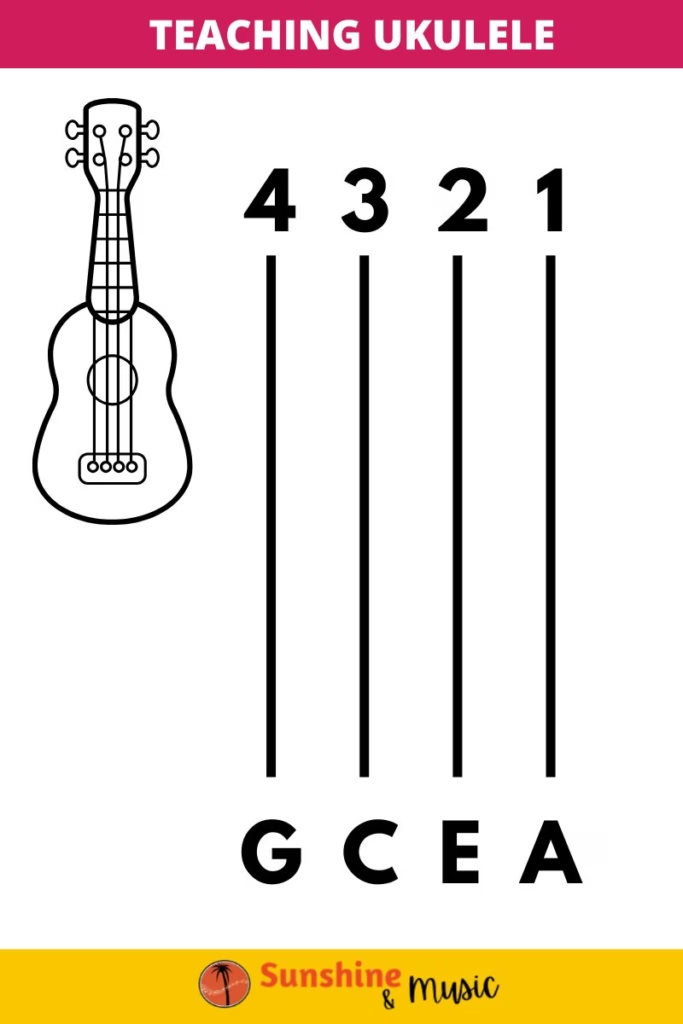
That brings me to the next major topic – ukulele tuning. Ukuleles have four strings, tuned to G, C, E and A. You should expect to give your ukuleles a quick tune each morning. If they aren’t terribly out of tune, it will probably take you about 5-7 minutes.
I recommend downloading a ukulele tuning app. It just makes the whole process super quick and easy. The app I use is called Ukulele Tuner and has a black and white picture of a ukulele on it.
One important thing that many teachers do not realize when they purchase a set of brand new ukuleles is that those strings are going to need some tender love and care for a bit to get them in tune.
One clinic I went to suggested running your fingers along the strings to help stretch out the string a bit and get it in tune faster. Once you’ve run your fingers along the string, tune the strings. After a bit of use and frequent tuning, they will start to hold their tuning much better.
Ukulele Basics
Alright, so now we have ukuleles AND they are tuned. What now? What should your first lesson look like teaching ukulele? Here is what I like to do for my introduction to ukulele lessons.
History of the Ukulele
First, we talk a little bit about the ukulele. What is the ukulele? How is it different from a guitar? Where did it come from?
We talk about how the ukulele is a member of the string family, and can come in different sizes. I mention that the ukulele was developed in Hawaii, and is a descendant of an instrument called the machete that was brought over from Portugal to Hawaii.
Parts of the Ukulele
Next, we learn about the names of the parts of the ukulele. I explain to the class that this is important so when we are talking about correct technique or other playing tips down the road, they will know what I am talking about when I use ukulele terminology.
It helps to explain why you are taking the time to learn names of each ukulele part to your students – since really all they want is to get the instrument in their hands and start playing. Sometimes you have to start slow to go fast.
Pro tip: Once you have taught the different parts of the ukulele to students, have them help each other review. The less talking you do, the better – especially during any instrument playing unit. The kids just want to play. Get out of their way as much as you can!
Ukulele Write the Room Scavenger Hunt
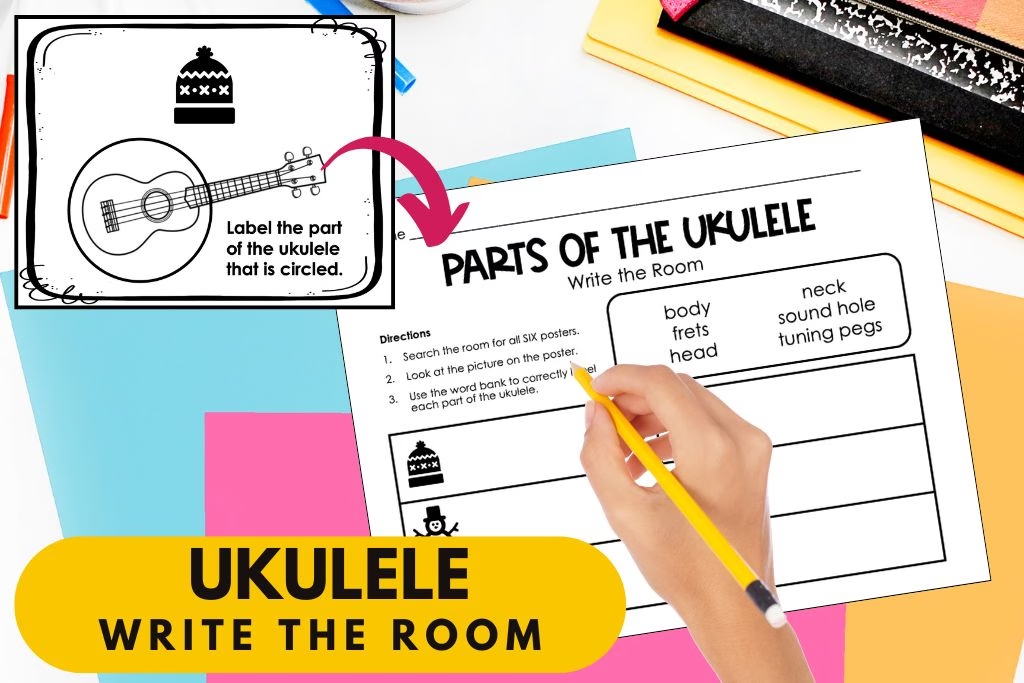
Another way I love to review parts of the ukulele is a Write the Room Scavenger Hunt. Students search the room for posters with pictures of parts of the instrument. Then, they have to correctly label each part.
For some extra fun, put on a ukulele song, like Somewhere Over the Rainbow by Israel Kamakawiwoʻole. See how many parts they can find and label before the end of the song.
Ukulele Strings
Basically at the same time that I am teaching parts of the ukulele, I am also teaching the strings. We learn their letter numbers (aka the note each string is tuned to – GCEA). And we learn the numbers – 1234. This is important for playing melodies and also for learning to read a chord chart.
I love a resource from the Rainbow Ukulele curriculum for teaching students the letter names of the strings. It is a song called Green Cats Eat Ants, which helps them remember GCEA. Although I don’t follow the curriculum to the letter, I still highly recommend this resource. It teaches everything from tablature to easy to chords and beyond in a sequenced curriculum.
Ukulele Tablature
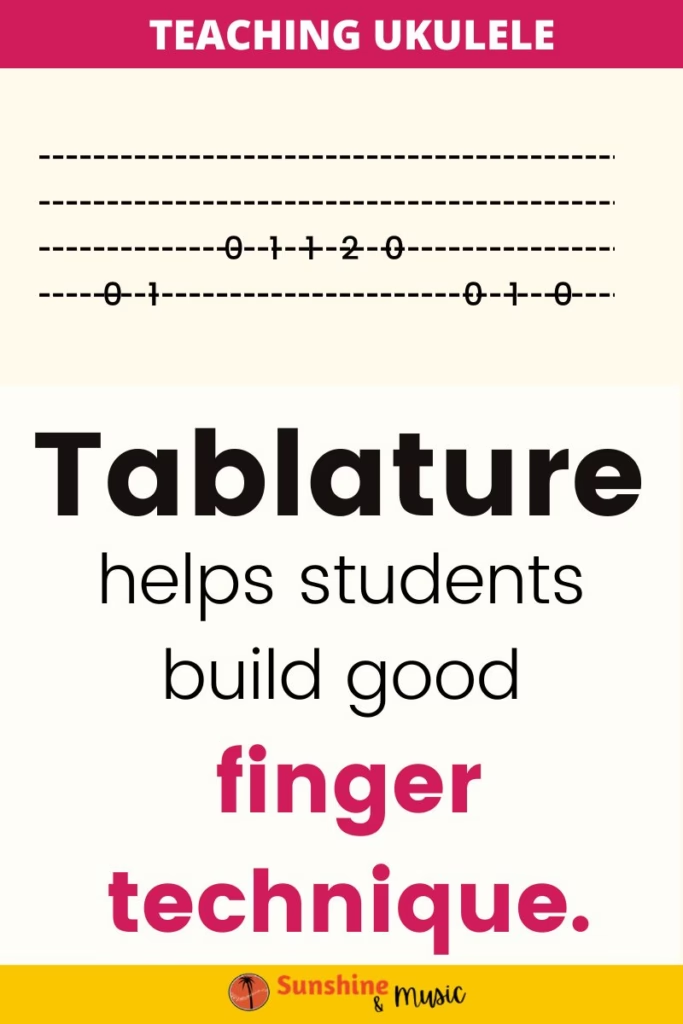
Currently I don’t teach tablature reading with my students. However, I definitely see the appeal. It seems like it would be great for training students to use their fingers with good technique on the fretboard, while allowing them the chance to play fun melodies.
Right now we do open strings songs and then rush ahead to chords. But don’t count tablature out! I might have to make some room for it in my teaching in the future.
Beginner Ukulele Chords
Finger Numbers
Once students know the strings and can play some open string songs, we start to learn chords. But there is one tiny step that should be done before playing your first chord. You need to teach your students about finger numbers.
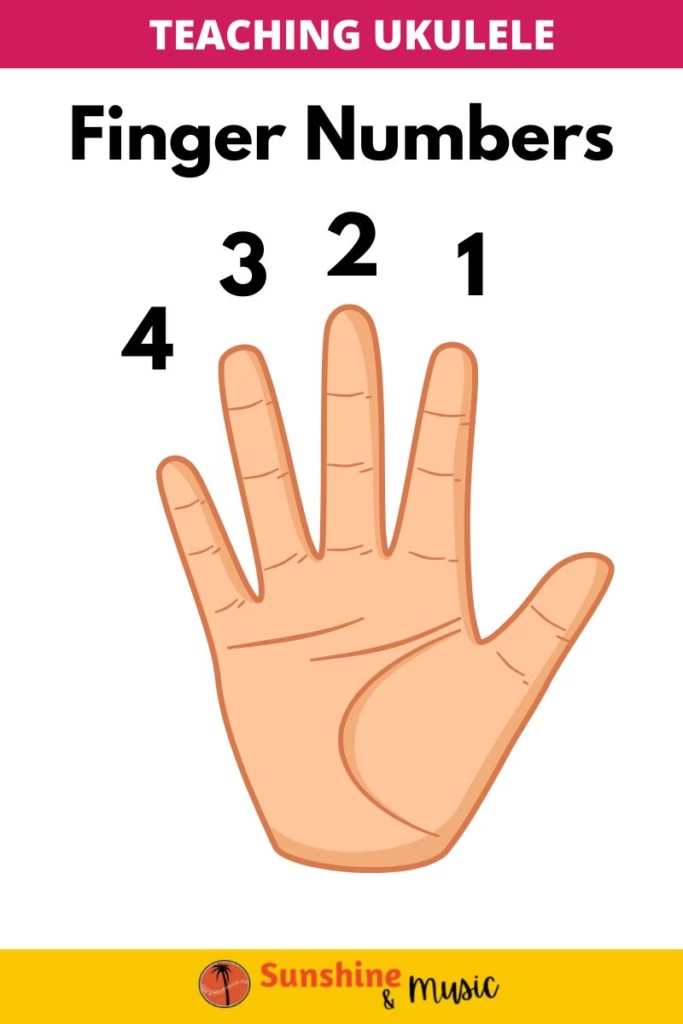
I have students tap each finger on their thumb as we say the number. Finger one is the pointer, finger two is the middle, finger three is the ring finger and finger four (rarely used) is the pinky. This is very important for understanding and reading chord charts going forward.
Teaching Ukulele Strumming Technique
Before we strum our first chord, I also like to teach them about strumming technique. This is one of the things my students struggle with most. I play this video for them, which I really like because it just gives them a couple main things to focus on to improve their strumming.
First Chord – C7
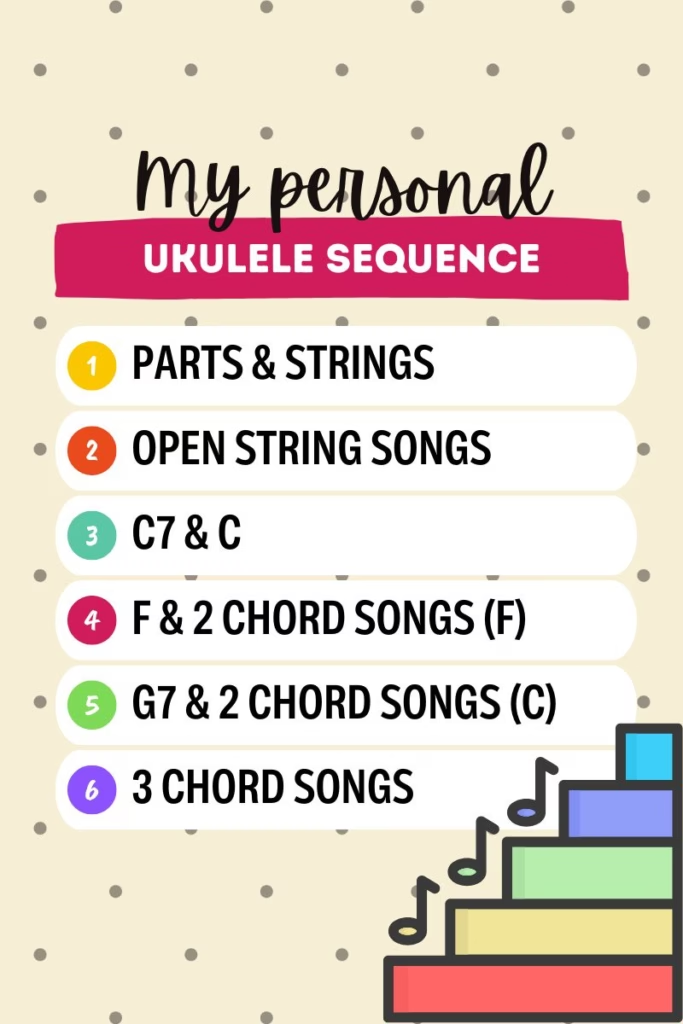
Now that we have a firm foundation, its time to read our first chord chart. I like to start with C7 because we can play an entire song with it – Lime in the Coconut. And of course because it is a pretty simple chord. First finger on the first string on the first fret.
I play this video of the Muppet Show doing Lime in the Coconut as I go around and check each student while they strum the chord.
Next Chords
After learning C7, students go on to learn C and then F. They play several songs using the C chord. Then they go back and play those same songs using the F chord.
Then they start learning some songs that use F and C7 and we talk about shifting between chords. Finally, students learn the G7 chord and can play some three chord songs.
Ukulele Beginner Songs
As mentioned before, I use many of the songs from the Rainbow Ukulele. However, I did change around the order of the levels to suit my needs.
But if you are not looking to spend that kind of money on a teaching resource, I very much get it. Honestly, almost all of the ukulele songs that are in the curriculum are simply folk songs you could teach students without purchasing the curriculum.
One Chord Songs on Ukulele
Anything pentatonic will do. Songs like:
- Rain, Rain Go Away
- Star Light, Star Bright
- Great Big House in New Orleans
- Snail, Snail
- Cobbler, Cobbler
I have students play a couple songs with the C chord. Then, once they have learned the F chord, they go back and do the same songs with the F chord.
Two Chord Ukulele Songs
- Skip to My Lou
- It’s Raining, It’s Pouring
- Old MacDonald
- Row Your Boat
- London Bridge
- Wheels on the Bus
Just like with the one chord songs, I have students start by playing some two chord songs using F and C7. Then, when they learn the G7 chord, I have them go back and play the same songs with C and G7.
Three Chord Songs
- He’s Got the Whole World in His Hands
- Twinkle Little Star
- Baa Baa Black Sheep
- If You’re Happy and You Know It
I sequence the songs based on how often the chords change. The more frequent the chord changes, the harder the song.
Pop Songs for Beginner Ukulele
Pop songs can be a really fun way for kids to practice chords. There are plenty of pop songs that use just a couple chords.
Rather than list them all, let me just tell you my favorite source of ukulele pop songs.
Ukulaliens is a YouTube Channel that was started by an elementary music teacher for their ukulele club, and then it has grown to become one of the most recommended resources for pop songs for the ukulele.
If you scroll down their YouTube page, you will see that the songs are organized by difficulty level. It is just a great, easy to use resource!
Pro tip: For beginner players who haven’t worked on shifting between chords yet, you can even divide up songs with multiple chords. Split your class into teams and have each team in charge of a different chord. This also gives their fingers a little break.
Teaching Ukulele in My Classroom
I teach ukulele using centers and individual practice. Students move at their own pace through the levels of ukulele skills. Here’s how it works:
Centers With Ukulele Games
Students rotate through different centers with assigned groups. These centers work on different ukulele skills. I currently have three main centers that students work through.
Memory Game
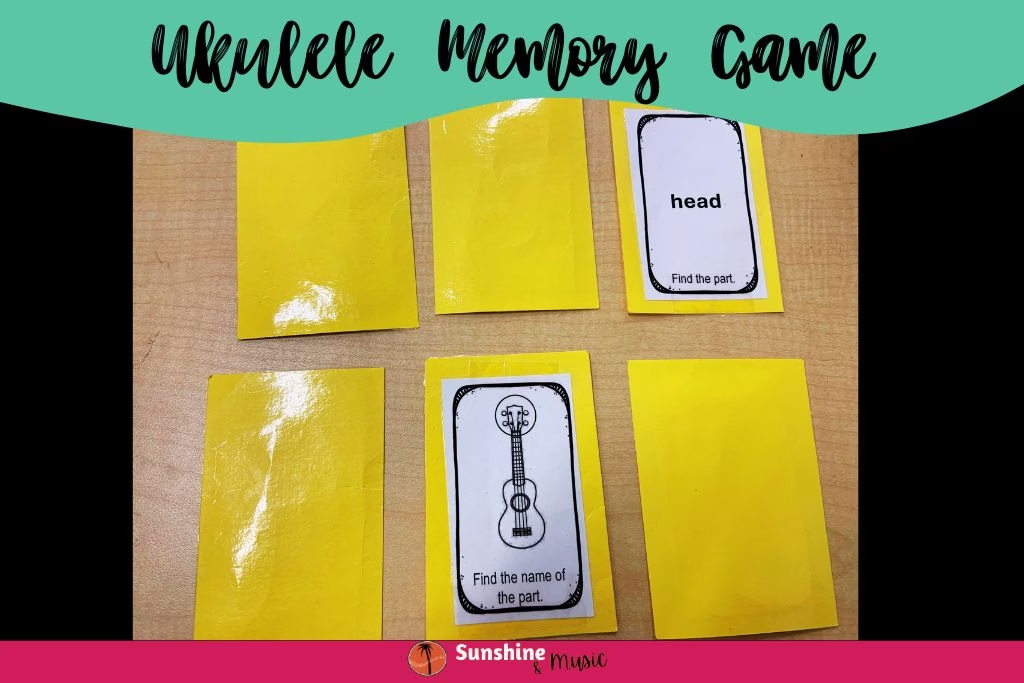
I start with a parts of the ukulele memory game. Students flip over the cards to find the matching parts. Once all students have mastered this level of skill, I switch it to numbers and letter names of the strings. Then there is one with finger numbers and simple chord charts. So the framework of the game stays the same (memory game), but the content changes as the students are ready for the next level.
I also think this station is important because it works on ukulele skills while still giving their fingers a rest from constant playing.
Create a Song
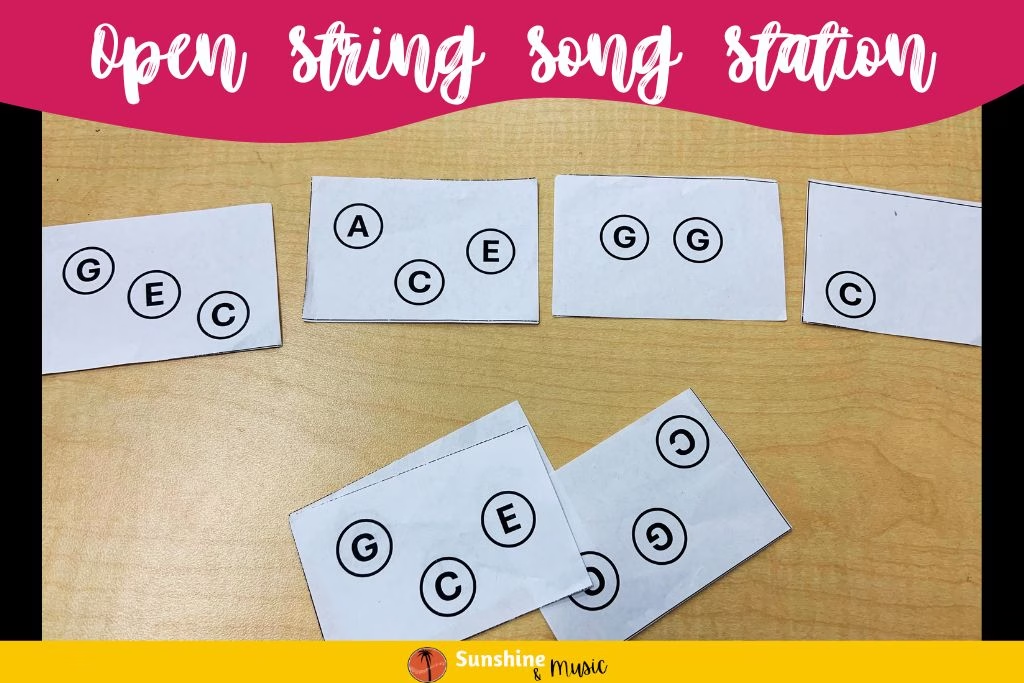
At this station, students use melody cards with the names of different strings to create their own open string ukulele songs. This station can also become more advanced by putting the open string notes on the staff or adding tablature.
Practice by Level
The final center is the practice and partner test station. This is where they work on their next level of skill that they want to pass. If they are ready to play a level, they also have the option of doing a partner test when they are at this station. A partner test allows them to play a song for a peer and pass the level that way, instead of always having to play for the teacher.
Testing on Skills
Right now there are three ways to test and pass a level in my room.
- Play for the teacher.
- Partner Test
- Record it on the computer
I call students up alphabetically to listen to them play. I allow students to pass two levels while they are playing for me (to prevent one student from using all the time).
Having a required testing element is important. While some students are super motivated and try to get to the highest level as quickly as possible, there are other students that sort of fall through the cracks. If I didn’t call them up to play any levels, they probably wouldn’t play any at all.
I have limits on partner testing as well. For our unit, which lasts about 6-8 weeks, I usually let students do three partner tests. This allows them the chance to pass some levels with a partner, but prevents rampant cheating from happening.
Now, let’s talk about that final way of testing – at the computer.
Teaching Ukuleles in a Flipped Classroom with Laptops

I am lucky enough to be able to borrow some laptops each year from my Media Specialist. I created a testing station at the back table where students can log in to Canvas – our Learning Management System – and record themselves playing a level.
On my lunch break, I watch the videos and either pass them or leave feedback. This added step has been a game changer. It has allowed students much more ability to play songs for me, without being bottlenecked waiting for me to be able to hear them in person.
Honestly, sometimes I think about getting 3-4 more laptops and freeing myself up completely to go around the room and manage the class and help where help is needed. It could be pretty amazing! Don’t sleep on flipped classrooms, folks. They can lower your lift considerably!
Ukulele Passports
There is one more important thing I need to mention. A problem that I had for years and years while teaching ukulele was that students would constantly be submitting tests for the wrong level. They would be trying to pass level ten when they hadn’t yet passed level three. This led to SO MUCH wasted time.
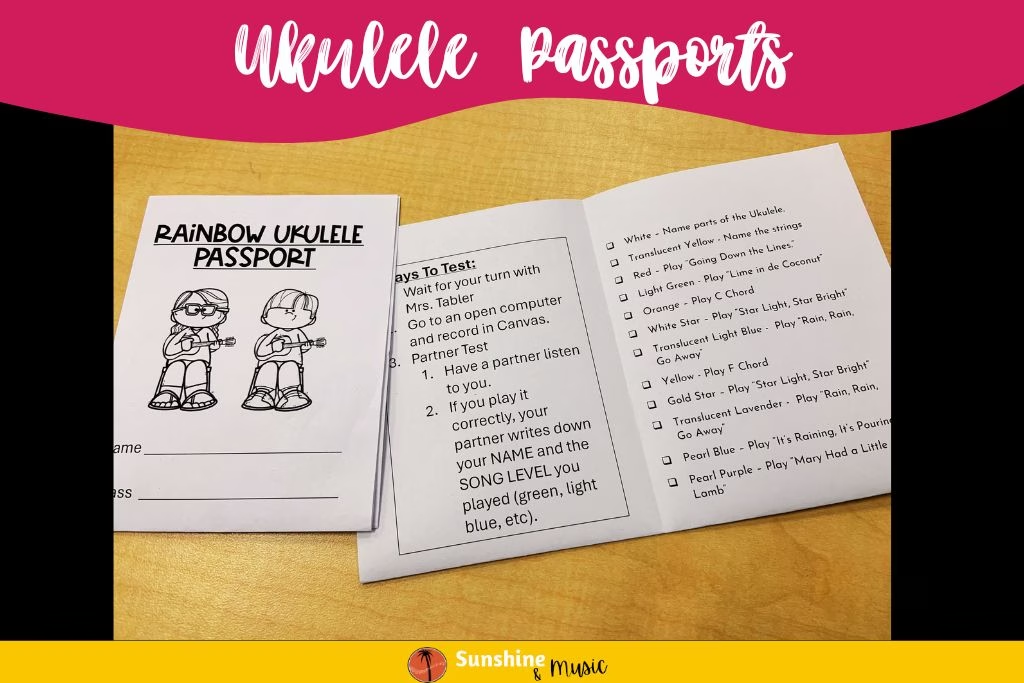
So I created ukulele passports. It has a list of skills from level 1 to level 25. And it also has a reminder of the three ways to test. This has been my other game changer. Now students always know what level they should be working on. Highly recommend.
More Articles Related to Teaching Ukulele
Centers of Music Class – ways to optimize your teaching with student centered learning
Teaching Recorders – your guide for elementary music



3 Responses