It can be SO HARD to find lessons on women composers for music class. While we have vast collections of lessons on composers like Tchaikovsky, Saint-Saens and Beethoven, few lessons on female composers come to mind.
This blog is here to change that. I have developed some activities that you can use in your classroom during Women’s History Month (or any other time of year). Let’s bring some of the great women composers of the past out of the darkness and highlight them in our class.
Great Women Composers
Florence Price – One of the First Black Women Composers
I love to teach about Florence Price at the end of February/beginning of March. February is Black History Month and March is Women’s History month, so what better composer to use during this transition?
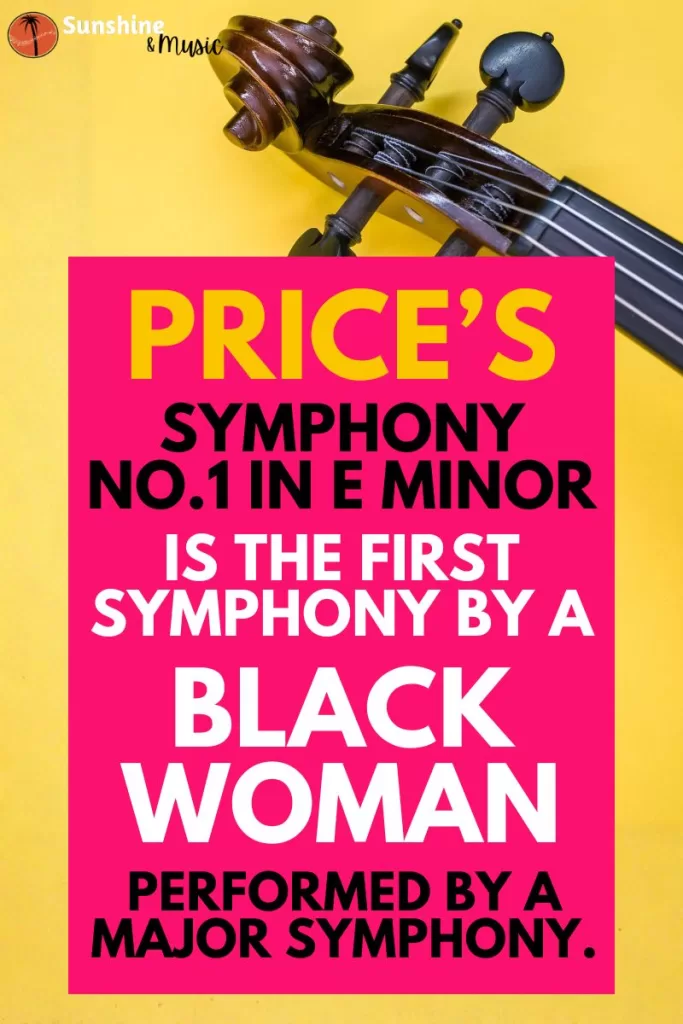
One of Price’s most famous pieces is Symphony #1 in E Minor. Fun fact – it was the first symphony written by a Black woman to be performed by a major symphony.
The finale (mvt 4) is an exciting and energetic piece. The piece can be a little challenging. It has many sections and sometimes the sections don’t have clear beginning and ending points. This can be a challenge when planning a movement activity.
But here is a suggestion of a scarf activity you could try with the piece that simplifies it down a little bit.
SCARF ACTIVITY
One recurring theme throughout the piece is the A theme heard right at the beginning of the finale.
Have your students spot this part whenever it happens in the song. Whenever the A theme is playing, students get to move around the room.
Then, during the other sections, they should freeze and move their scarf to the beat, side to side. During the final fast section at the end, have students find their way back to their music spot.
Women Composers of the 19th Century
Clara Schumann
Clara Schumann and her husband Robert Schumann were a powerhouse musical couple. Clara Schumann had a very interesting life and it is worth sharing with your students.
I would start my lesson off by learning about Clara Schumann. You could do something as simple as a biographical slide or dive a little deeper with an activity like write the room or a composer fact flip book.
You can get all kinds of activities for learning about Clara Schumann in the Women’s History Month Composer Biography Bundle.
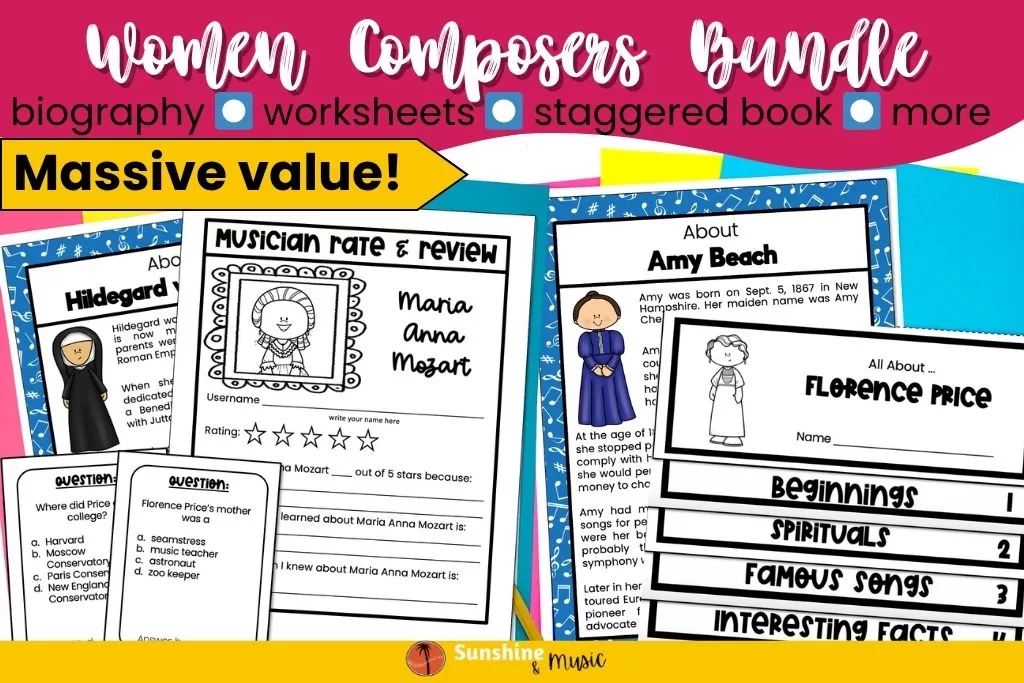
It has 10 interactive lesson ideas (and they are no tech so they make great sub plans too!)
Next – have your students listen to Variations on a Theme by Robert Schumann. I think after you have a little bit of understanding about the relationship between Clara and her husband, this piece takes on new meaning.
As students listen, have them pay attention to the mood of the song and create a mood timeline. By this, I mean as the song progresses, they should color stripes with a color that they feel represents the music.
As changes happen in the dynamics, instruments, etc, students should switch colors in their time line. The finished product might look something like this:
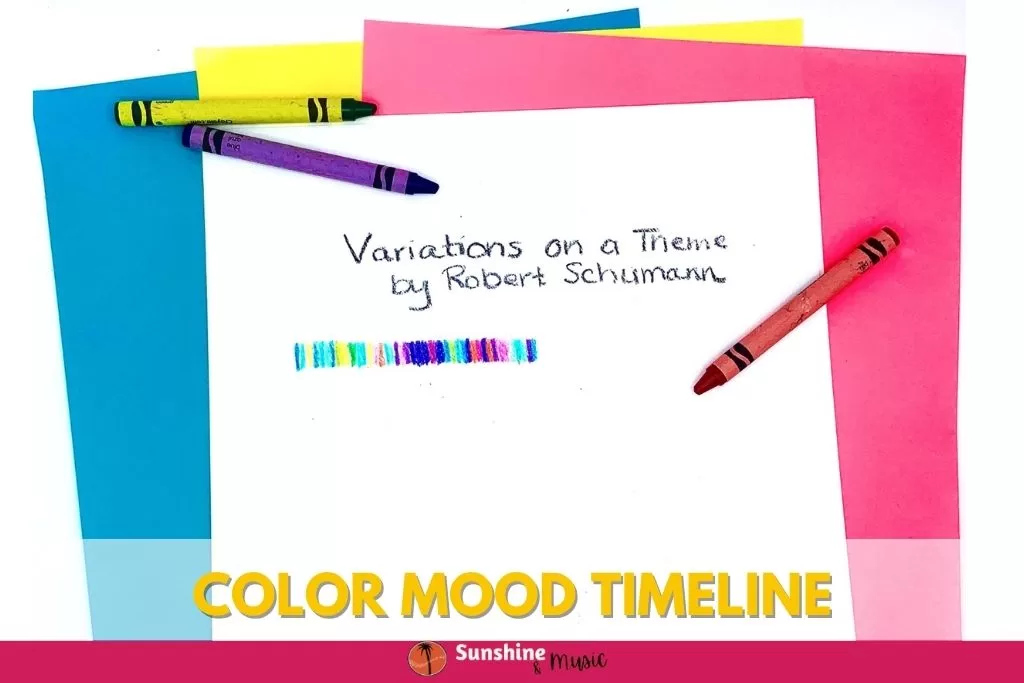
At the end, have students share and explain their mood timeline with a partner. Have them discuss why they think Clara created that song and what emotions she was trying to convey.
Amy Beach
Amy Beach was another amazing woman composer during the turn of the century.
Her Gaelic Symphony is one of her most famous works, but each movement is 10:00+ minutes, which can be hard for elementary audiences.
So here is an activity to her piano piece called Dreaming. Have students listen and free write about what she might be “dreaming” about. You know what they say – students should be writing in all subject areas (and I’m all for it when it actually makes sense with my curriculum).
Amy Beach | Dreaming op.15 nr.3 | Evgenia Nekrasova | Piano
Hildegard of Bingen: One of the Only Women Composers of the Medieval Period
I think Hildegarde of Bingen is a very interesting character in history. She was writing, studying science and even preaching during a time when women weren’t doing any of these things.
Hildegard wrote some pretty amazing music. Learning about Hildegarde of Bingen is a great time to teach your students about medieval music – something they may have never been exposed to before.
Teaching New Types of Music
Now, I know you might be feeling some trepidation about exposing your students to music that is so unfamiliar. I know what I would have in the past. Students are so quick to judge anything that isn’t their favorite pop song. But this year I had a breakthrough.
Before I started playing any NEW type of music, we had a discussion about how some students have this initial reaction that DIFFERENT is BAD and WEIRD.
But that isn’t the type of person we want to be. DIFFERENT is good. DIFFERENT is what makes our world interesting. Let’s get curious about DIFFERENT and see what things we LIKE about it or what we want to learn more about.
Folks, I cannot tell you what a shift this has been for my classes. It has made all the difference. Use this on repeat whenever you expose your students to things that are new. I think you might be surprised by the results.
Hildegarde of Bingen – De Spiritu Sancto
Okay, that said – have your students listen to some of Hildegarde of Bingen’s work. You may need to give them a little background information about Hildgarde’s life for them to understand some of the music.
For example, Hildegarde was probably only able to compose (and do all the other things she did) because she was a nun. Her music is written in Latin because that is the language that was used in the church. And her lyrics will have spiritual references because she was a nun.
Also, point out how there is mostly unison singing. This was common at the time. And also, I think it is interesting to show student neumes (early musical writing before actual notes that we know today).
This is a cool recording of her song De Spiritu Sancto. It even makes use of period instruments.
Hildegard of Bingen: De Spiritu Sancto (Holy Spirit, The Quickener Of Life)
Maria Anna Mozart: Female Classical Composer?
It is hard to study Maria Anna Mozart as a composer because none of her work has survived. But we know from letters that Wolfgang sent to Maria Anna that he saw some of the music she wrote and approved of it.
I highly recommend reading the book I Am Mozart Too: The Lost Genius of Maria Anna Mozart by Audrey Ades. It gives students a little peek into what it was like to be a woman during Mozart’s time period and helps explain the reason that we have Women’s History Month. Make sure to read the notes from the author at the end. They really help put things in context.
Since there is no surviving music from Maria Anna, I would focus more on her life. If teaching this in my class, I would start with some biographical activities, such as my Resident Expert activity where each student learns a little about her and then shares their knowledge with other members of the group. Then we might put together an interactive flipbook (sometimes also called a staggered book). Or just do something simple like a word search.
(Don’t forget – you can grab 10 biographical resources on Maria Anna Mozart in my Women’s History Month Women Composer Bundle). It really is the perfect way to easily slide some women’s history into your music lessons with very little extra effort required.
I would definitely end my lesson on Maria Anna Mozart by having a discussion about what students got out of learning about Maria Anna.
- What questions did it bring up?
- What new things did you learn about women in history?
- You can lead the conversation in so many directions.
Modern Women Composers
Okay, so we’ve visited some of the greatest female composers for Women’s History Month. But I think the real impact is in realizing that history continues to be written every day. Connect the past with what women are doing TODAY. So who are some modern women composers writing music NOW?
Jessie Montgomery Starburst
I learned about Jessie Montgomery’s music while prepping my students for their annual trip to the orchestra. The NC Symphony does a great job highlighting composers of a wide variety of backgrounds, which I love.
Jessie Montgomery’s Starburst is a piece that I have heard performed several times. One thing that I think is so great about modern composers is that we can watch actual video footage about them and their creative process. It just gives so much insight into the composer, and maybe plants a seed in some of your students that might grow in the future.
Here is just one video available about Jessie Montgomery:
Starburst is a piece with lots of energy and imagery. For my class, we use it as a chance to use vocabulary to describe a song.
I gave students a paper. At the top was a box to draw a picture to go with the song. At the bottom, they had to explain the decisions they made about their drawing based on what they heard in the music.
I explained to students that they didn’t need to draw objects if they didn’t want to. They could use colors, shapes and textures. They could draw inspiration from the title “Starburst,” but they also had to LISTEN and describe actual musical elements they heard in the song and how they represented them within the picture. I play the song once for them to draw, and then one more time for them to write out their explanation.
I have to say that I got some really amazing pictures and explanations from the students. As long as you have talked about musical elements prior to this so they have some vocabulary to work with and you explain the process, I think you will be surprised with what your students can come up with.
Germaine Franco
I’ve got one more great female composer for you before we wrap up. Germaine Franco is a film composer who has scored tons of movies. But two that your students may be familiar with are Encanto and Coco.
This would be a great time to talk about the difference between a song writer and a composer, because as many of you may know, Lin Manuel Miranda was the song writer for Encanto. But Germain Franco wrote the score.
Here is an example of music from the score of Encanto. This song is called “Antonio’s Voice,” and plays during the part of the film where we first discover his room after he receives his gift.

Germaine Franco – Antonio’s Voice (From “Encanto”/Score/Audio Only)
Franco makes great use of Colombian instruments and rhythms throughout the film. After listening to this clip you could talk about dynamic changes you heard and the shift from instrumental to the use of voices, etc. What types of feelings do you think she was trying to create? Why did she make those musical choices?
Then, I would probably wrap up with something just for fun, like this scarf dance to “Colombia, Mi Encanto.” Although this one is not technical by Franco, Lin Manuel Miranda and German Franco worked very closely together on the music in the movie, and I feel that their work complements each other. And like I said, it is just fun! How can you teach Encanto without including at least one iconic song?
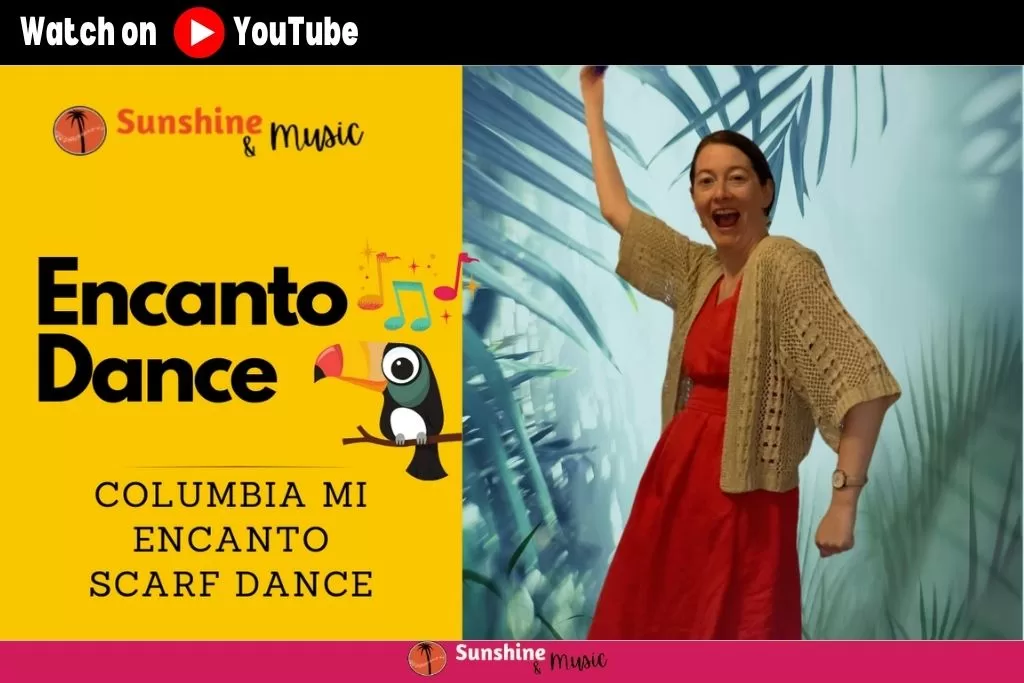
Columbia Mi Encanto – Scarf Dance for Elementary Music
I hope you find some new activities to enjoy in your classroom. And make sure to check out the Women’s History Month Composer Bundle for some quick activities you can include throughout March to teach your students all about Women’s History in music.