
Learning music notes can be one of the biggest challenges in elementary music. Students often struggle to read and sing music notes. But it doesn’t have to be that way. Let me share with you some of the ideas on how to teach music notation so that your students pick it up with ease.
Learning Music Notes: Sing and Hear
Teaching music notation begins LONG before students ever actually see notes on the treble clef staff. It all begins with a sense of inner understanding.

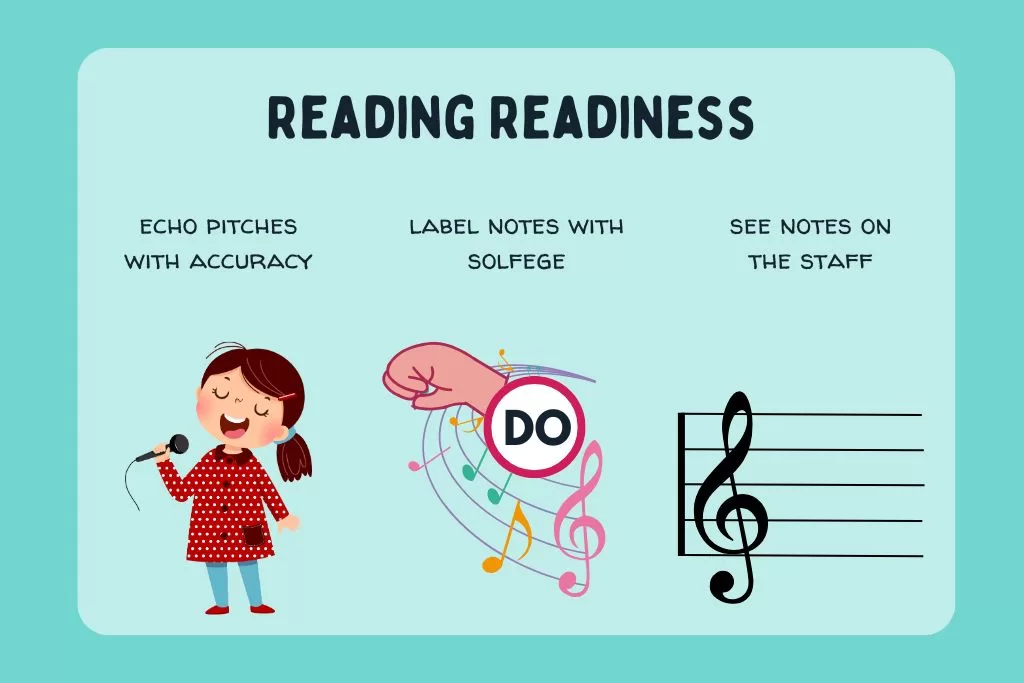
First, students will need to work on matching pitch. I work with my students on learning about their singing voice in kindergarten, and we do warm-ups to work on our head voice in every grade level. Then we work a lot on echoing as a group and individually, so students can really get a sense of what matching pitch sounds like.
Next we add solfege. Solfege is a big part of how I teach reading pitches, so this is a very important step. Mind you, at this point, students are not even seeing notes at all. This is all done just through echoing or identifying patterns within familiar songs. But I do display a solfege ladder to help students start to see the relationship between the different solfege pitches.
Don’t get me wrong though. It can be great to have visuals of the pitches you are singing. Perhaps you show the song you are learning in notation as you sing them. I just don’t explicitly focus on the visual notation yet. Think of it sort of like how you read a book to a baby. You aren’t trying to teach them how to recognize the letter T yet, but just understand that reading is a way of communicating.
Learning to Read First Music Notes
When you are ready to start teaching those very first note reading lessons, there are lots of ways you can start. Right now I am teaching SO and MI as my first two pitches to illustrate high and low. But you could start with MI-RE-DO, or just DO or whatever you want.
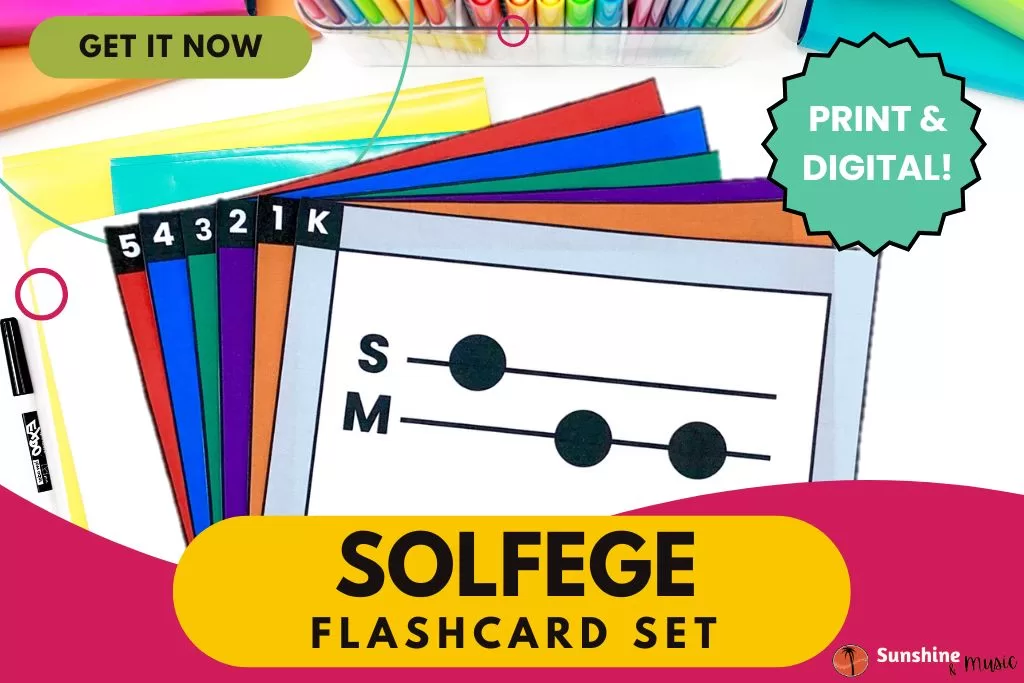
When I am teaching these first two pitches, we do a lot of echo-reading. I hold up a solfege flashcard and sing the pattern on solfege and they echo-read it back. Then I add the step of THINK IT, then HEAR IT (I sing) and SING IT (they sing). Eventually I remove the middle step, so that they are thinking and then singing it by themselves.
Other ways that I get students used to reading these notes include:
- Recognize the pattern in familiar songs
- Pick the pattern out of two choices on a staff worksheet
Apply Note Reading To Instruments
Once students have a basic handle on reading those two notes, I have them apply their learning by reading and playing notes on instruments.
Here are some ways you can have them integrate note reading on to instrument:
- Play familiar patterns
- Arrange familiar patterns to make a song
- Figure out new patterns using them same two notes (SO-MI)
You may even consider taking off all the other bars except for SO and MI on your barred instruments to really help students focus on those two notes to start out.
Reading Music Notes by Writing Music Notes
Reading music notes and writing music notes go hand in hand. So I quickly move students to writing notes on the staff.
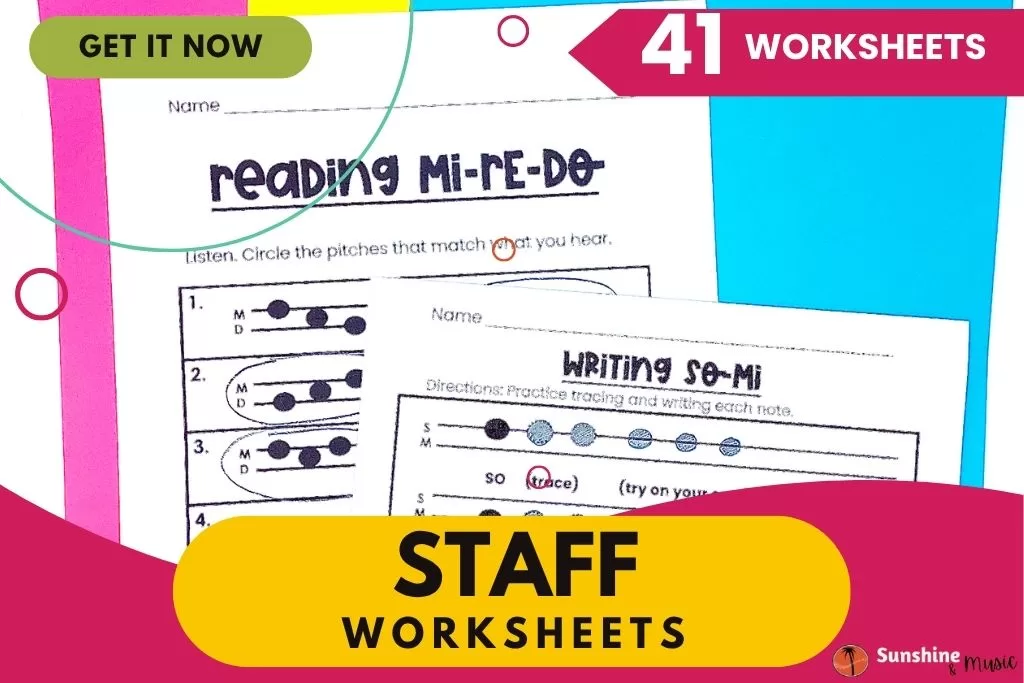
First we start by tracing the notes on a staff writing worksheet. Then I have them work with partners to try and write patterns that I sing, and we go over the answers on the board. This allows them to talk through things together and figure them out and learn together as a class.
Finally, I have them use patterns we have learned during the unit to mix and match and create and write down their own SO-MI song.
Build Off Music Reading Foundations
Of course, we all know that learning music notes doesn’t stop with SO and MI. Once I’ve taught my students a solid foundation, I can build on it with similar steps year after year.
One of the first things I do is shift DO (I teach moveable DO). I want students to understand that SO and MI can be on ANY line or space and to understand the relationship between the notes no matter where they are located on the staff.
Each year we learn more music notes, using basically the same sequence as before. We review the notes from last year, then add a few more with the very same sequence.
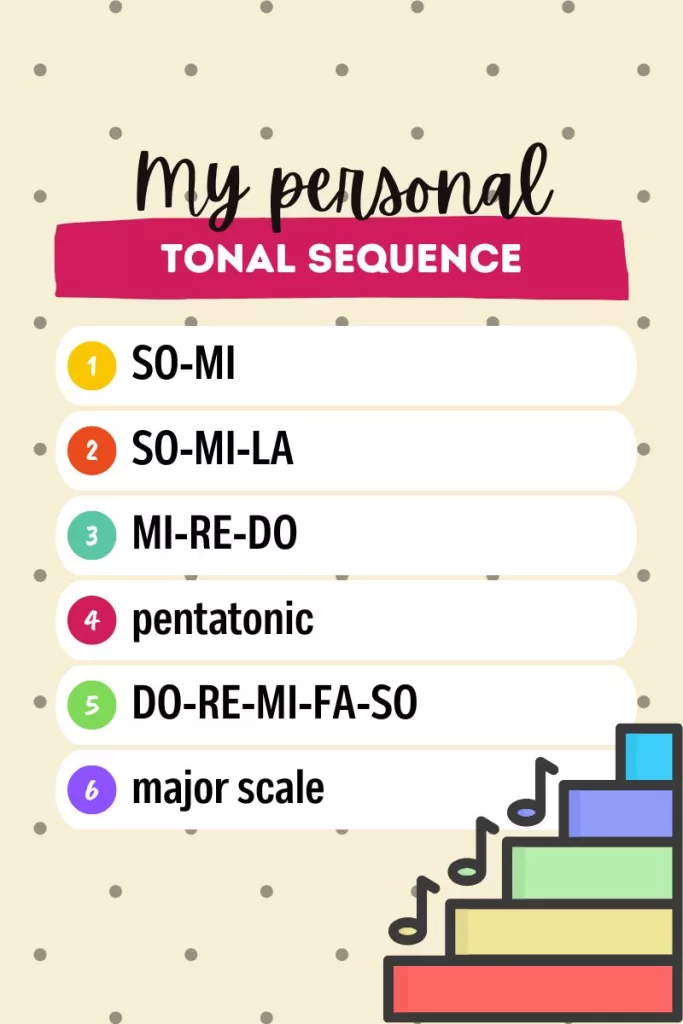
In general, here is the order of solfege notes I teach:
- SO-MI
- SO-MI-LA
- MI-RE-DO
- Pentatonic
- DO-RE-MI-FA-SO
- Full scale
Treble Clef Music Notes
So – here’s a little side note about teaching the notes of the treble clef. I do teach this, but only after EVERYTHING else. I feel like this part is just way less significant than understanding how the notes SOUND and relate to one another.
Learning Music Notes – Next Steps
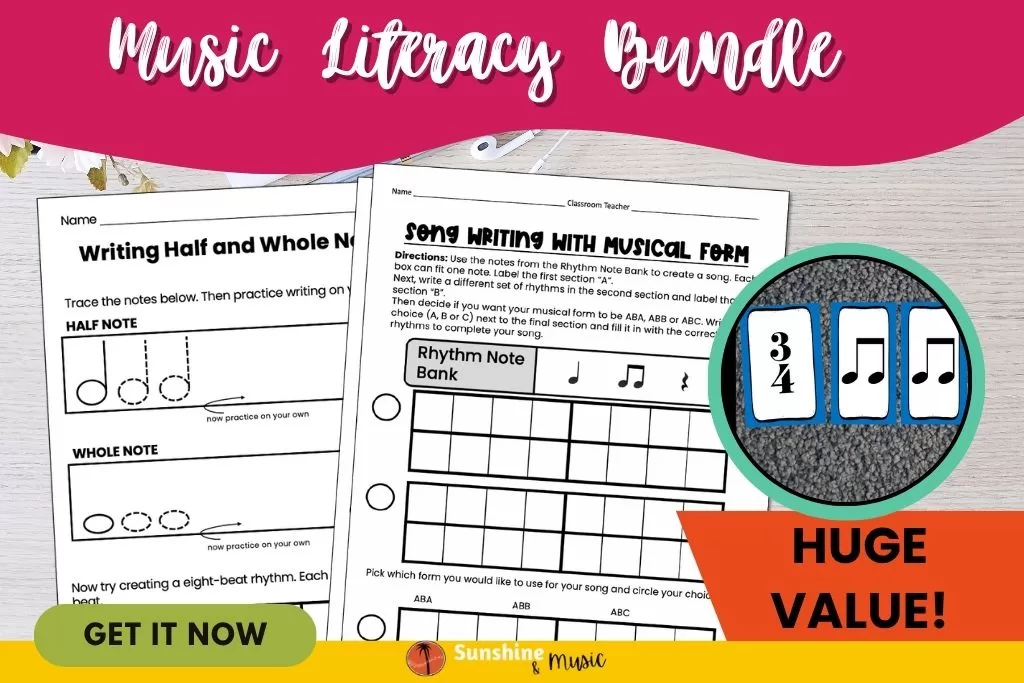
I hope this gives you a little insight into the process I use to make my students fluent in reading notes on the staff. If you are looking for some easy resources to help students with learning music notes in your classroom, I highly recommend this set of Music Staff Worksheets.
They are included in my Music Literacy Bundle, which has all the flashcards, worksheets and other resources you will need, all for a great price!




2 Responses